Journal of Behavior Analysis and Support
Korean Association for Behavior Analysis
Article

보호적 개입 감축 프로그램에 대한 체계적 분석

김대용1, 김민희2,*
Daeyong Kim1, Minhee Kim2,*
1Professor, Department of Behavior Analysis and Intervention, Konyang Cyber University / Deputy Director, Konyang University Hospital Autism and Developmental Disorder Center (kimdy@kycu.ac.kr)
2Behavior therapist, Konyang University Hospital Autism and Developmental Disorder Center (301680@kyuh,ac.kr)
*Corresponding author, Behavior therapist, Konyang University Hospital Autism and Developmental Disorder Center (301680@kyuh,ac.kr)

ⓒ Copyright 2026, The Daesoon Academy of Sciences. This is an Open-Access article distributed under the terms of the Creative Commons Attribution Non-Commercial License (http://creativecommons.org/licenses/by-nc/3.0/) which permits unrestricted non-commercial use, distribution, and reproduction in any medium, provided the original work is properly cited.

Received: Jan 29, 2026; Revised: Apr 10, 2026; Accepted: Apr 11, 2026

Published Online: Apr 30, 2026

초록

본 연구는 발달장애인 지원 현장에서 보호적 개입을 감축하기 위한 프로그램을 개발하기 위한 기초연구로서 관련 선행연구를 체계적으로 분석하는 것을 목적으로 한다. 이를 위해 PRISMA 절차에 따라 문헌을 검색·선정하였으며, 18편의 보호적 개입 감축 관련 연구를 분석하였다. 분석 대상 논문의 발행 연도, 연구 수행 국가 등을 중심으로 일반적인 연구 동향을 분석하였다. 다음으로, 감축하고자 한 보호적 개입의 유형, 서비스 이용인의 인구학적 정보, 연구 수행 장소, 보호적 개입 감축 프로그램의 구성요소인 a) 인권, b) 서비스 이용인의 참여, c) 기관 차원의 리더십, d) 교육, e) 데이터 수집과 분석, f) 사후 리뷰, g) 예방 전략과 반응 전략 및 h) 프로그램의 효과를 중심으로 분석하였다. 분석 결과 보호적 개입 감축 프로그램 관련 연구는 미국과 영국을 중심으로 2010년대 이후 본격적으로 이루어진 것으로 확인되었다. 성인기 발달장애인을 중심으로 서비스가 이루어졌고, 감축하고자 하는 보호적 개입의 유형은 신체를 이용한 보호적 개입(physical restraint)이 중심적으로 나타났다. 또한 보호적 개입 감축을 위해 데이터 수집과 분석, 예방 전략과 반응 전략의 적용, 종사자 교육 등에 대해서는 세부적인 정보가 제시되었으나, 사후 리뷰, 기관 차원의 리더십 및 서비스 이용인의 참여는 상대적으로 제한적인 정보가 제시된 것으로 확인되었다. 이러한 연구 결과를 토대로 본 연구는 국내 발달장애인 지원 현장에서 보호적 개입을 최소화하기 위한 보호적 개입 감축 프로그램의 주요 구성요소를 제시하였다.

Abstract

This study aimed to conduct a systematic literature review of prior research as a foundational step toward developing programs to reduce restrictive interventions in service settings for individuals with developmental disabilities. Following the PRISMA guidelines, relevant studies were identified and selected, and a total of 18 studies on restrictive intervention reduction were analyzed. General research trends were analyzed based on study characteristics, including publication years and countries in which the studies were conducted. In addition, the analysis focused on the types of restrictive interventions targeted for reduction, demographic characteristics of service users, study settings, and the key components of restrictive intervention reduction programs: (a) human rights, (b) service user participation, (c) organizational leadership for reduction, (d) training and education, (e) data collection and analysis, (f) post-intervention review, (g) proactive and reactive strategies, and (h) program effectiveness. The findings indicated that research on restrictive intervention reduction programs has been conducted primarily in the United States and the United Kingdom and has increased notably since the 2010s. Services were primarily provided to adults with developmental disabilities, and the primary type of restrictive intervention targeted for reduction was physical restraint. In addition, detailed information was reported on data collection and analysis, the implementation of proactive and reactive strategies, and training and education as key components of restrictive intervention reduction programs. In contrast, relatively limited information was reported regarding post-intervention review, organizational leadership for reduction, and service user participation. Based on these findings, this study identified the key components of restrictive intervention reduction programs to support the minimization of restrictive interventions in service settings for individuals with developmental disabilities in South Korea.

Keywords: 발달장애; 보호적 개입 감축; 통합돌봄서비스
Keywords: Developmental Disabilities; Reducing Restrictive Intervention; Integrated Care Service

Ⅰ. 서론

1. 연구의 필요성 및 목적

국가인권위원회(이하 인권위)는 도전적 행동을 보이는 사람의 행동을 이해하고 지원하기 위한 판단 기준, 방법 및 이행 절차 수립 등이 제한적인 점을 강조하며 발달장애 학생의 도전적 행동에 사례별로 적용할 수 있는 구체적인 방법을 포함한 매뉴얼 마련 등 관련 정책을 권고하였다(National Human Rights Commission of Korea, 2019). 특히, 인권위는 대한민국 헌법 제12조 “모든 국민은 신체의 자유를 가진다”에 근거하여 모든 인간의 신체적 자유가 보장될 필요가 있다고 하였다. 더불어, 도전적 행동을 보이는 당사자 등이 안전에 위협이 되는 상황에서 이루어지는 보호적 개입(restrictive intervention/restraint)은 행동의 원인 분석과 이를 토대로 구체적 지원 방안을 포함한 긍정적 행동지원 등 예방 전략을 충분히 실시했음에도 불가피한 상황에 한해 신중하게 판단해야 함을 강조하였다(National Human Rights Commission of Korea, 2019.10.22.). 현재 국내 발달장애인 지원 현장에서는 이용인 또는 종사자의 안전이 위협되는 상황에서 이루어지는 보호적 개입에 대한 선행연구 및 관련 매뉴얼은 제한적으로 찾아볼 수 있고, 특히 법령 등에서의 명확한 정의나 현장 실행을 위한 체계적인 지원 체계 등은 부재한 실정이다(Kim & Yun, 2025). 이 같은 상황에서 도전적 행동이 심하고 일상생활, 의사소통 등에 지원이 필요한 최중증 발달장애인이 이용하는 통합돌봄서비스의 경우 절박성, 비대체성 및 일시성 세 가지 요건을 고려한 보호적 개입을 언급하고 있으나, 보호적 개입이 이용인에 대한 인권침해로 보일 수 있는 것과 같은 딜레마에 봉착하게 될 수 있다고 보고되고 있다(Kim & Yun, 2025).

국외에서는 보호적 개입의 정의와 유형별 개념이 관련 가이드라인 등을 통해 비교적 구체적으로 제시되고 있다(Care Quality Commission, 2015; Department of Health, 2014; 2015; Equality and Human Rights Commission, 2019; Restraint Reduction Network, 2019). 보호적 개입은 개인의 움직임, 자유 및 독립적으로 행동할 수 있는 자유를 제한할 목적으로 수행되는 모든 행위로 신체를 이용한 보호적 개입, 공간을 이용한 보호적 개입 및 도구를 이용한 보호적 개입 등이 있다(Equality and Human Rights Commission, 2019). 신체를 이용한 보호적 개입(physical restraint)은 타인의 신체 또는 신체 일부의 움직임을 방지, 제한 또는 제지할 목적으로 이루어지는 모든 직접적인 신체적 접촉으로 정의된다(Department of Health, 2014). 공간을 이용한 보호적 개입(seclusion)은 서비스를 이용하는 다른 사람들로부터 분리된 공간에 이용인을 감독하에 고립시키고 해당 장소로부터 이용인이 나가는 것을 방지하는 조치로 정의된다(Department of Health, 2015). 도구를 이용한 보호적 개입(mechanical restraint)은 주로 행동을 통제할 목적으로 개인의 신체 또는 신체 일부의 움직임을 방지, 제한 또는 제지하기 위해 장치를 사용하는 것으로 정의된다(Care Quality Commission, 2015).

국내에서도 관련 기관을 중심으로 보호적 개입 관련 매뉴얼 개발 및 교육 등이 이루어지고 있다(Daejeon Association of Parents with Disabilities & Daejeon Center for Persons with Developmental Disabilities, 2024; Ministry of Health and Welfare, 2025; National Institute of Special Education, 2020; Seoul Advocacy Agency for Persons with Disabilities, 2020). 보호적 개입 관련 매뉴얼에는 보호적 개입의 정의, 사례를 통한 유형 제시, 보호적 개입과 학대의 구분, 그리고 이용인과 종사자의 안전을 위협할 수 있는 상황에 대비한 위기관리계획의 사전 수립 및 실행 방안 등이 포함되어 있다(Choi et al., 2020; Kim, Kang & Ji, 2020). 또한 보호적 개입의 수준, 상황별 대응 방안 및 주의 사항 등을 제시한 매뉴얼 개발도 이루어진 바 있다(Kim et al., 2024). 보호적 개입 관련 교육은 2024년 7월부터 시행된 최중증 발달장애인 통합돌봄서비스 종사자 집합교육 등을 통해 위기관리계획서 작성, 보호적 개입의 이해와 적용 시 유의 사항 및 시연 등을 포함한 내용으로 강의와 워크숍 형태로 이루어지고 있다(Ministry of Health and Welfare, 2025). 그러나 제한적인 교육 시수, 이론 중심의 교육 방법 등으로 인해 현장에서 지원에 필요한 교육이 이루어지기에는 한계가 있는 것으로 보고되고 있다(Kim & Yun, 2025). 최중증 발달장애인 통합돌봄서비스에서는 안전에 위협이 되는 행동에 대해 위기관리계획을 작성하도록 제시하고 있고, 비대체성, 절박성 및 일시성이라는 보호적 개입 적용 관련 고려할 사항을 제시하고 있다(Ministry of Health and Welfare, 2025). 이를 미루어볼 때 보호적 개입은 발달장애인 서비스 지원 현장에서 이미 이루어지고 있는 것으로 볼 수 있다(Choi, Kim, & Kim, 2021; Ministry of Health and Welfare, 2025; You, Lee, & Han, 2020). 선행연구에서는 평생교육기관·시설 이용인의 도전적 행동에 대해 보호적 개입 여부에 대해 그렇다고 응답한 비율은 약 47%로 나타났으며 손목 잡기와 같은 신체를 이용한 보호적 개입은 약 63%로 나타났다(Choi et al., 2021). 이 같은 신체를 이용한 보호적 개입이 이뤄지는 상황은 자해, 머리카락 잡아당기기, 또는 타인에 대한 공격행동 등 안전을 위협하는 상황에서 발생하는 것으로 보고되었다(Choi et al., 2021). 또 다른 선행연구에서는 이용인의 도전적 행동으로 인해 종사자 상해 등이 발생했을 때 분리된 공간으로의 이동이 약 76%, 최소한의 보호적 개입이 약 62%로 나타났다(You et al., 2020).

한편, 국외에서는 보호적 개입의 사용에 있어서 필수적으로 선행되어야 하는 사항 등을 정책과 가이드라인을 통해 명시하고 있다. 영국의 국립보건임상평가연구소는 지적장애 및 도전적 행동을 보이는 아동, 청소년 및 성인과 보호자, 보건 및 사회복지 서비스 제공기관을 대상으로『도전적 행동과 지적장애: 도전적 행동을 나타내는 지적장애인을 위한 예방 및 지원』가이드라인을 제시한 바 있다(NICE, 2015). 해당 가이드라인에서는 보호적 개입 시 건강, 심리 및 학대 위험을 고려한 평가, 실행 과정과 결과의 문서화, 장기적인 행동지원계획의 일부로서 보호적 개입 감축의 필요성을 강조하고 있다. 또한 보호적 개입의 안전성, 효과, 빈도, 지속시간 및 필요성에 대한 정기적인 검토와 재평가를 권고하고 있다(NICE, 2015). 미국 교육부는 『보호적 개입과 공간을 이용한 보호적 개입에 대한 리소스 문서』를 통해 보호적 개입에 대한 정기적인 교육, 모니터링, 관련 정책 검토와 업데이트 및 데이터 기반 문서화 등 15가지 원칙을 제시하였다(U.S. Department of Education, 2012). 특히 보호적 개입의 계획, 실행 과정 및 모니터링은 공인 행동분석전문가(BCBA-D, BCBA) 또는 도전적 행동 지원에 대한 전문적 훈련과 경험을 갖춘 관련 분야 전문가에 의해 이루어져야 함을 강조하고 있다(Association for Behavior Analysis International, 2010). 또한 위기 상황에서의 보호적 개입의 적용 시에는 사전에 명확하게 정의된 기준의 이행, 행동 감소를 위한 진정(de-escalation) 기술의 포함, 위험 행동의 안전한 통제와 부상을 예방할 수 있는 최소한의 보호적 개입 적용 및 명확하고 필수적인 해제 기준의 설정이 필요함을 제시하고 있다(ABAI, 2010). 이와 같이 철저한 계획, 실행 및 사후 검토가 이루어지더라도 보호적 개입은 최후의 수단으로 적용되어야 하며, 이용인과 주변 인물의 안전을 위협할 수 있는 도전적 행동을 최소화 하기 위해서는 예방 전략, 의사소통 및 대체 행동의 교수 등의 지원이 필수적으로 선행되어야 함을 강조하고 있다(ABAI, 2010; NICE, 2015). 그러나 이러한 국외 가이드라인과 정책적 권고에도 불구하고 보호적 개입 감축 관련 선행연구는 종사자 교육, 학교 및 정신건강 관련 기관 등 특정 내용 또는 서비스 영역을 중심으로 체계적으로 분석된 연구이거나 단일대상연구에 대한 메타분석 등 중재 효과를 중심으로 분석된 연구가 주로 확인되었다(Goulet, Larue, & Dumais, 2017; Heyvaert et al., 2014; Hodgkiss & Harding, 2023; McDonnell et al., 2023). 이러한 연구들은 관련 종사자 교육과 같은 특정 요소 또는 서비스 영역에 한정되어 이루어졌으며 보호적 개입 감축 프로그램의 주요 요소로 제시되는 인권, 이용인의 참여, 기관 차원의 리더십, 종사자 교육, 데이터 기반 지원 체계 및 사후 검토 등을 포함하여 보호적 개입 감축의 구성요소를 통합적인 관점에서 분석한 연구는 제한적인 실정이다.

본 연구에서 보호적 개입 감축은 긍정적 행동지원에 기반한 예방 전략과 사회적으로 적절한 행동의 증진을 통해 도전적 행동을 감소시키고, 이용인과 종사자의 안전이 위협되는 상황에서 제한적으로 사용되는 보호적 개입의 사용을 점진적으로 최소화해 나가는 체계적인 과정을 의미한다. 이러한 관점에서 보호적 개입 감축은 도전적 행동 예방과 사회적으로 적절한 행동의 증진을 포함하는 행동지원체계의 구축 과정으로 이해될 필요가 있다. 이에 본 연구에서는 보호적 개입 감축 관련 국외 선행연구를 체계적으로 분석하여 국내 발달장애인 지원 현장에서 적용할 수 있는 보호적 개입 감축 프로그램의 기초연구로서 주요 구성요소를 분석하고자 한다.

2. 연구 문제

본 연구의 구체적인 연구 문제는 다음과 같다.

첫째, 보호적 개입 감축 프로그램을 다룬 분석 대상 논문의 발행 연도, 국가, 게재 학술지, 키워드, 연구 참여자, 연구 분야 및 연구 설계의 일반적인 동향은 어떠한가?

둘째, 보호적 개입 감축 프로그램에서 감축하고자 한 보호적 개입 유형, 서비스 이용인의 장애 관련 정보, 연령대 및 연구 환경은 어떠한가?

셋째, 보호적 개입 감축 프로그램의 주요 구성요소인 인권, 당사자의 참여, 기관 차원의 리더십, 교육, 데이터 수집 및 분석, 사후 리뷰, 예방 전략과 반응 전략 및 효과는 어떠한가?

Ⅱ. 연구 방법

1. 분석 대상 논문 선정 기준

분석 대상 논문의 기준을 선정하였다. 첫째, 동료 심사를 거친 학술지에 게재된 논문, 둘째, 영어로 게재된 논문, 셋째, 연구 참여자가 발달장애인 또는 발달장애인 지원 종사자와 기관 등을 대상으로 한 발달장애인 관련 논문, 넷째, 보호적 개입 감축 관련 내용을 확인할 수 있는 논문이다. 이상의 네 가지 기준을 모두 충족하는 논문을 분석 대상 논문으로 선정하였다.

2. 분석 대상 논문 선정 절차

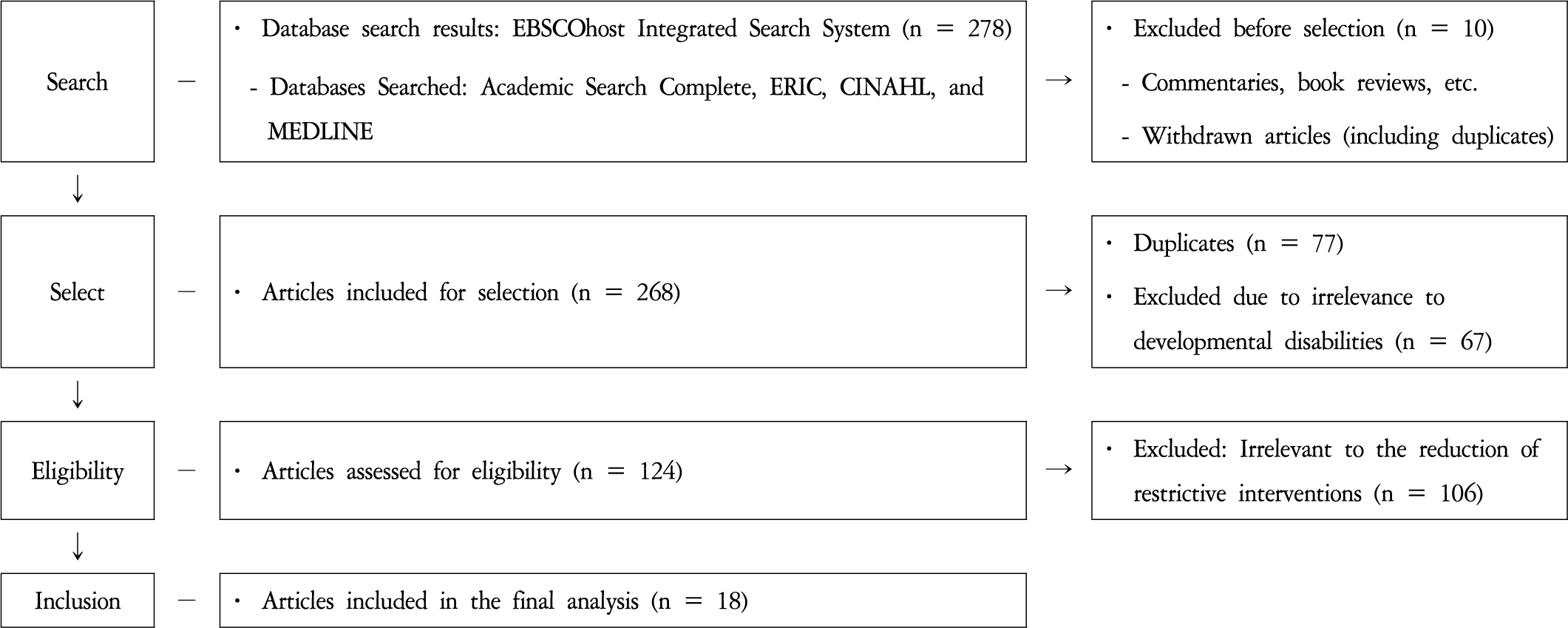
보호적 개입 감축 프로그램에 대한 선행연구를 체계적으로 분석하기 위해 PRISMA 절차(Page et al., 2021)에 따라 분석 대상 논문을 선정하였다(<Figure 1> 참조).
jbas-13-1-83-g1
Figure 1. Selection of articles for analysis according to the PRISMA process
Download Original Figure

검색 단계에서는 총 278편의 문헌이 확인되었다. 문헌 검색은 EBSCOhost 통합 검색 시스템을 사용하였으며, 대상 데이터베이스는 Academic Search Complete, ERIC, CINAHL 및 MEDLINE이다. 보호적 개입 감축 프로그램 관련 연구의 전반적인 동향을 파악하기 위해 검색 기간을 제한하지 않았으며, 연구 참여자, 연구 목적 및 결과와 관련된 검색어를 구분하여 검색하였다. 연구 참여자 관련 검색어는 ‘지적 및 발달장애(Intellectual and Developmental Disabilit*, IDD)’, ‘지적장애(Intellectual Disabilit*, Learning Disabilit*)’, ‘자폐스펙트럼장애(Autism Spectrum Disorder*, ASD, Autism)’이다. 연구 목적 및 결과 관련 검색어는 ‘보호적 개입(restrictive practice* OR physical intervention* OR restraint*)’, ‘공간을 이용한 보호적 개입(seclusion)’, ‘감축(reduction OR minimi*)’, ‘도전적 행동(Challenging Behavior* OR Challenging Behaviour*)’, ‘문제행동(Problem Behavior* OR Problem Behaviour*)’, ‘공격성(Aggression)’, ‘자해(Self-injurious*)’, ‘예방(prevent*)’, ‘중재(intervention*)’, ‘전략(strategy)’, ‘연수(training)’, ‘프로그램(program*)’이며, 모든 검색어는 불리언 연산자(Boolean connectors: AND, OR)를 활용해 구성하였다. 검색어의 변화를 포함하기 위해 절단 검색(trunction, *)기능을 사용하였다. 또한 선별 단계에서는 중복된 문헌 77편과 초록과 연구 참여자 정보 검토를 통해 확인한 발달장애와 관련 없는 연구 67편을 제외하였다. 적격 단계에서는 논문 전문 검토를 통해 보호적 개입 감축을 위한 전략 등을 확인할 수 없는 논문 106편을 제외하였으며 최종적으로 18편의 논문을 분석 대상에 포함하였다.

3. 분석 방법

본 연구는 국외 보호적 개입 감축 프로그램을 분석하기 위해 <Table 1>과 같이 분석 틀을 구성하였다. 분석 대상 연구의 일반적인 동향을 파악하기 위해 발행 연도, 연구 수행 국가, 게재 학술지명, 키워드, 연구 참여자, 연구 분야 및 연구 설계 방법 7개 항목을 분석하였다. 연구 수행 국가는 분석 대상 연구에서 보고된 연구 참여자에 대한 정보 또는 연구가 수행된 기관의 위치를 기준으로 분석하였다. 보호적 개입 감축 프로그램의 내용 분석 항목은 11개로 감축하고자 한 보호적 개입의 유형, 서비스 이용인의 장애 관련 정보 및 연령대, 연구 수행 장소, 인권, 이용인의 참여, 기관 차원의 리더십, 교육, 데이터 수집 및 분석, 사후 리뷰, 예방 전략과 반응 전략 및 효과로 구성하였다. 분석 항목은 선행연구와 영국의『Mental Health Units (Use of Force) Act statutory guidance (2018)』에 근거한 보호적 개입 감축 프로그램의 교육 표준인『Restraint Reduction Network』(이하 RRN)에서 제시한 보호적 개입 감축 프로그램의 핵심 요소인 인권, 종사자 교육, 데이터 기반 모니터링, 사후 리뷰 및 기관 차원의 감축 목표 설정 등의 리더십을 토대로 설정하였다(RRN, 2019).

Table 1. Analysis framework for restrictive intervention reduction programs
Domain Item Analysis details
General trends · Year
· Journal title
· Participants
· Research design
· Country
· Keywords
· Research field
-
Reduction of restrictive intervention · Types of restrictive interventions to be reduced · Restrictive intervention
· Seclusion
· Physical restraint

· Mechanical restraint
· Disability-related information and age groups of service users · Types of disability
· Age groups
· Comorbidities & multiple disabilities
· Research settings -
· Human rights -
· Service user participation -
· Organizational leadership for reduction -
· Training and education · Trainer
· Training methods
· Training participants
· Training content
· Data collection and analysis · Behavior
 - Function: Status, Tools
 - Observation & Measurement: Content, tools
· Restrictive intervention
 - Content
 - Tools
· Post-intervention review -
· Proactive and reactive strategies · Proactive strategies
· Reactive strategies
· Program effectiveness · Effectiveness, Specifics
· Assessment of Maintenance & Generalization
Download Excel Table

감축하고자 한 보호적 개입의 유형, 서비스 이용인의 장애 관련 정보, 연령대 및 연구 수행 장소는 선행연구를 토대로 구성하였다(Goulet et al., 2017; Heyvaert et al., 2014; Hodgkiss & Harding, 2023). 인권은 관련 법령 또는 권리 선언 근거 여부, 전문 기관의 외부 검토 또는 승인 체계 및 프로그램 목적 내 인권 보장 가치 명시 여부 등을 기준으로 정의하였다. 이용인 참여는 서비스 계획과 의사결정 참여, 개별화된 지원 서비스 설계 및 자기 옹호로, 기관 차원의 리더십은 보호적 개입 감축 목표 설정, 기관 차원의 철학 및 문화 등으로 구체화하였다(RRN, 2019). 종사자 교육은 선행연구를 토대로 강사, 대상, 방법 및 내용으로 세분화하여 분석하였다(McDonnell et al., 2023). 사후 리뷰는 보호적 개입 이후 이루어지는 데이터 기반의 피드백과 성찰 과정으로 정의하였으며, 예방 전략과 반응 전략은 환경 조정, 선행사건 중재, 대체 행동 교수 및 진정(de-escalation) 전략과 위기 상황 발생 시 안전 확보를 위한 전략으로 정의하였다(RRN, 2019). 데이터 수집 및 분석 항목은 행동 관련 데이터와 보호적 개입 관련 데이터로 구분하였다. 행동 관련 데이터는 기능적 행동 평가 여부, 행동 관찰 및 측정 내용 및 사용 도구를 중심으로 분석하였으며, 보호적 개입 관련 데이터는 보호적 개입의 유형, 빈도, 시간 등과 관련된 데이터 내용과 사용 도구를 중심으로 분석하였다(Choi, Kim, & Kang, 2017). 또한 보호적 개입 감축 프로그램의 효과는 효과 유무와 함께 유지, 일반화 측정 여부로 구분하여 분석하였다.

각 분석 항목은 분석 대상 논문에서 해당 내용이 명시적으로 제시된 경우 포함으로 분류하였다. 예를 들어 인권 항목은 이용인의 권리 보장 관련 내용이나 외부 윤리 검토 또는 승인 체계 등이 제시된 경우 포함으로 분류하였으며, 기관 차원의 리더십 항목은 보호적 개입 감축 목표 설정이나 기관 차원의 철학 및 지원 체계가 명시된 경우 포함으로 분류하였다. 이러한 분석은 사전에 설정된 기준에 따라 연구자 간 독립적으로 수행되었으며, 의견이 일치하지 않는 경우 원문 재검토와 협의 절차를 거쳐 최종적으로 확정하였다.

4. 분석자 간 일치도

본 연구는 보호적 개입 감축 프로그램 관련 선행연구 분석의 신뢰도를 확보하기 위하여 두 명의 분석자가 사전에 설정된 분석 기준에 따라 독립적으로 문헌을 분석하였다. 분석자는 박사급 행동분석전문가 1명과 석사급 행동분석가 1명이었으며 분석 결과에 차이가 있는 항목에 대해서는 원문 재검토와 협의 절차를 통해 합의에 도달하는 방식으로 최종 분석 결과를 확정하였다.

Ⅲ. 연구 결과

1. 분석 대상 논문의 일반적인 동향

분석 대상 연구 논문 18편의 발행 연도를 분석한 결과 1986년 1편을 시작으로 1991년부터 2000년까지 5편, 2001년부터 2010년까지 3편, 2011년부터 2020년까지 7편, 그리고 2022년에 2편이 게재된 것으로 나타났다. 연구 수행 국가는 미국 8편, 영국 6편, 캐나다 2편, 네덜란드 2편 순으로 나타났다. 분석 대상 연구 논문 18편이 게재된 학술지를 살펴본 결과, Behavioral Interventions 4편, British Journal of Learning Disabilities, Frontiers in Psychiatry, Journal of Applied Research in Intellectual Disabilities, Journal of Policy and Practice in Intellectual Disabilities는 각각 2편이었다. International Journal of Psychosocial Rehabilitation, Journal of Advanced Nursing, Journal of Clinical Nursing, Journal on Developmental Disabilities, Journal of Psychiatric Intensive Care, Support for Learning은 각각 1편이었다(<Table 2> 참조).

Table 2. General characteristics of the included studies
Code The authors Year Country Journal title
A Chartier et al. 2020 Canada Journal on Developmental Disabilities
B Klaver et al. 2020 Netherlands Journal of Policy and Practice in Intellectual Disabilities
C Stirling & McHugh 1998 United Kingdom Journal of Advanced Nursing
D Long, et al. 2016 United Kingdom Journal of Psychiatric Intensive Care
E Sanders 2009 United States Journal of Applied Research in Intellectual Disabilities
F Obi 1997 United States Behavioral Interventions
G Ellison, Daisy M 1997 United States Behavioral Interventions
H Foxx, et al. 1986 United States Behavioral Interventions
I Singh, et al. 2016 United States Frontiers in Psychiatry
J Larue et al. 2018 Canada Journal of Applied Research in Intellectual Disabilities
K Hewitt et al. 2016 United Kingdom British Journal of Learning Disabilities
L Preece 2014 United Kingdom Support for Learning
M Kinter & Uhl 1997 United States International Journal of Psychosocial Rehabilitation
N Fluttert et al. 2010 Netherlands Journal of Clinical Nursing
O Thompson et al. 2022 United States Journal of Policy and Practice in Intellectual Disabilities
P Luiselli et al. 2000 United States Behavioral Interventions
Q Blairs et al. 2007 United Kingdom British Journal of Learning Disabilities
R Haines-Delmont et al. 2022 United Kingdom Frontiers in Psychiatry
Download Excel Table

분석 대상 논문 18편 중 키워드가 제시되지 않은 논문 4편(F, G, H, P)을 제외한 14편의 키워드는 총 69개로 확인되었다. 키워드는 장애, 도전적 행동, 보호적 개입 및 연구의 4개 영역으로 구분하였으며, 그 결과는 <Table 3>에 제시하였다.

Table 3. Keyword analysis of the included studies
Domain Keyword Code n
Disability Developmental Intellectual Disability A, B, C, J, O 6
Autism Spectrum Disorder Q
Other Personality Disorders N 1
Challenging behavior Terms Challenging Behavior A, B, K, L, O, Q 6
Topography Aggression, Aggressive behavior I, Q, R 4
Anxiety Q
Violence C, R
Other Severe behavioural disorders J 2
Chronicity O
Restrictive intervention Terms Umbrella term Restraint C, D, J, Q 6
Restrictive intervention D
Physical Physical interventions K, L
Spatial Seclusion D, J
Comprehensive reduction framework System Quality assurance measures A 6
Positive behavior support B, D
Mindfulness-Based Positive Behavior Support, MBPBS program I
No force first R
Lean Thinking, Six Sigma M
Support Behaviour support plans A 6
1:1 staffing I
early signs N
De-escalation D
Risk management C, N
Deep touch pressure Q
Training Staff training B, E 4
Family training, Parent training K, L
Other Practice O 1
Outcomes Service users Quality of life B 6
Staff Psychological stress, Staff turnover I
Organization Benefit-cost analysis I
Costs E
Other Intrusive procedure A
Restraint reduction E, R
Safety E
Study Participants Parents L 2
Nurses N
Setting Filed Forensic mental health nursing N 2
Mental health R
Secure setting for women D
Organizational nature Psychiatric hospital M 3
Inpatient settings R
Methods Case study J 2
Longitudinal O

Note. Keywords were not specified in studies F, G, H, and P. Duplicates were excluded.

Download Excel Table

먼저 장애 관련 키워드를 살펴보면 지적장애 또는 자폐스펙트럼장애를 키워드로 제시한 논문은 14편 중 6편이었다. 도전적 행동 관련 키워드는 도전적 행동 용어 자체를 제시한 논문이 6편이었으며, 공격, 불안 등 도전적 행동의 형태를 제시한 논문은 4편, 만성성(chronicity) 또는 심각한 행동적 어려움(severe behavioural disorders)을 제시한 논문은 2편으로 나타났다. 보호적 개입 관련 키워드를 살펴보면 보호적 개입, 신체를 이용한 보호적 개입 및 공간을 이용한 보호적 개입을 제시한 논문은 6편이었다. 또한 보호적 개입 감축 방법 관련 체계 또는 지원 방식을 키워드로 제시한 논문은 각각 6편이었으며, 종사자 또는 부모 등의 교육을 제시한 논문은 4편이었다. 보호적 개입 감축의 결과와 관련하여 이용인의 삶의 질, 종사자의 심리적 스트레스 및 기관의 비용 등을 키워드로 제시한 논문은 6편으로 나타났다.

연구 관련 키워드를 살펴보면, 가족, 간호사 등과 같은 연구 참여자를 키워드로 제시한 논문은 2편이었으며, 연구 수행 현장의 분야 또는 기관의 성격을 제시한 논문은 5편, 연구 방법을 제시한 논문은 2편으로 나타났다.

분석 대상 논문 18편의 연구 참여자, 연구 분야 및 연구 설계를 분석하였으며 그 결과는 <Table 4>에 제시하였다. 먼저 연구 참여자를 살펴보면 기관 종사자만을 연구 참여자로 포함한 논문은 1편(B)이었으며 이를 제외한 17편은 모두 이용인이 연구 참여자인 것으로 나타났다. 기관 종사자가 연구에 참여한 논문은 총 7편(A, B, D, E, H, I, J)이었으며 이 중 4편(A, G, H, I)은 이용인과 기관 종사자가 함께 참여한 연구였다. 보호자를 포함한 가족이 연구에 참여한 논문은 3편(J, K, L)이었으며 이 중 1편(J)은 이용인, 종사자와 가족이 모두 참여한 연구였고 2편(K, L)은 이용인과 보호자 또는 가족이 함께 참여한 연구로 나타났다.

Table 4. Participants, settings, and study designs of the included studies
Code Study participants Research setting Study design
Service users Staff Family members Medical sector Welfare sector Educational Sector Home Classification Details
A - - - - N Longitudinal design
B - - - - - N One group, double pretest–posttest design
C - - - - - C Case study
D - - - - - N Pre–post design
E - - - N Pretest-posttest design
F - - - - - C Single-subject design
G - - - - - C Case study
H - - - - E Quasi-experimental pre-post-maintenance design
I - - - E Randomized controlled trial
J - - - - C Case study
K - - - - C Case study
L - - - - N Pre-post-follow-up design
M - - - - - C Single-case design
N - - - - - E One way case-crossover design
O - - - - - N Longitudinal design
P - - - - C Single-subject design
Q - - - - - C Case study
R - - - - - E Pretest-posttest quasi-experimental design

Note. C: Case Study; E: Experimental Study; N: Non-experimental Study

Download Excel Table

연구 수행 분야를 분석한 결과 복지 분야에서 수행된 연구가 10편(A, B, C, E, F, G, H, I, O, P)으로 가장 많았으며 의료 분야에서 수행된 연구는 6편(D, I, M, N, Q, R), 교육 현장에서 수행된 연구는 2편(E, P), 가정에서 수행된 연구는 2편으로 확인되었다. 또한 복지와 교육 분야에서 동시에 수행된 연구는 1편(E), 의료와 복지 분야에서 동시에 수행된 연구는 1편(I)으로 나타났다.

연구 설계를 분석한 결과 실험 연구는 4편(H, I, N, R), 비실험 연구는 6편(A, B, D, E, L, O), 사례연구는 8편(C, F, G, J, K, M, P, Q)으로 확인되었다.

2. 분석 대상 논문의 세부 분석 결과
1) 연구 참여자 및 연구 환경 분석 결과
(1) 감축하고자 한 보호적 개입의 유형과 발달장애인 관련 정보

분석 대상 연구 18편을 대상으로 감축하고자 하는 보호적 개입과 발달장애인의 장애 유형, 중복 장애 또는 동반 질환의 여부 및 연령대를 분석하였으며 그 결과는 <Table 5>에 제시하였다. 감축하고자 하는 보호적 개입의 유형을 분석한 결과, 신체를 이용한 보호적 개입 9편(B, E, G, I, K, O, P, Q, R)으로 가장 많았으며, 보호적 개입으로 명시된 연구는 6편(A, C, D, J, L, M), 도구를 이용한 보호적 개입 4편(F, G, H, O) 및 공간을 이용한 보호적 개입이 4편(D, H, J, N)으로 나타났다. 이 중 보호적 개입과 공간을 이용한 보호적 개입을 동시에 감축하고자 한 연구는 2편(D, J), 도구를 이용한 보호적 개입과 신체를 이용한 보호적 개입을 동시에 감축하고자 한 연구는 2편(G, O)으로 나타났다. 또 도구를 이용한 보호적 개입과 공간을 이용한 보호적 개입을 모두 감축하고자 한 연구는 1편(H)으로 분석되었다. 감축하고자 하는 보호적 개입이 신체를 이용한 보호적 개입인 연구는 총 9편이었으며 이 중 6편(G, I, K, O, P, R)에서 신체를 이용한 보호적 개입의 세부 내용을 제시하였다. 연구 G는 신체를 이용한 보호적 개입을 공격행동과 자해를 보이는 연구 참여자가 과제 수행을 할 수 있도록 손을 이용한 신체적 촉구가 이루어질 때 다른 한 손 또는 다리로 공격행동이 나타나는 것을 방지하기 위해 다른 한 명의 종사자가 손 또는 다리를 잡을 수 있는 것으로 정의하였다. 연구 I에서는 신체를 이용한 보호적 개입을 본인, 주변인 또는 종사자에게 해를 입힐 수 있는 위험이 임박하거나 언어를 통한 재지시로 통제할 수 없을 때 서비스 이용인을 짧게 신체를 붙잡는 것으로 정의하였다. 연구 K는 공격행동이 나타났을 때 행동을 막기 위하여 상대를 밀어낸 경우로 정의하였다. 연구 O는 자해, 공격 및 파괴 등의 행동이 나타났을 때 종사자가 붙잡거나 제한된 공간에서의 타임아웃과 과잉 교정으로, 연구 P는 타인을 물고 때리거나 할퀴거나 발로 차는 등의 행동이 나타날 때 바닥의 보호 매트에서 엎드린 자세로 눕히고 손을 종사자 1명씩 옆에서 잡고 있다가 불안정한 모습 없이 관찰되지 않은 상태에서 15초 경과 후 손을 떼고 활동으로 복귀할 수 있는 것으로 하였다. 연구 R은 자해, 위협 행동 등이 나타났을 때 중재자의 의도가 타인의 신체 또는 신체 일부의 움직임을 방지, 제한 또는 제지하려는 모든 직접적인 신체적 접촉으로 정의하고 구체적으로 엎드린 자세, 똑바로 누운 자세, 옆으로 누운 자세, 서 있는 자세, 앉은 자세, 무릎 꿇은 자세, 제한적인 이동 등이 해당한다고 보았다. 감축하고자 하는 보호적 개입이 도구를 이용한 보호적 개입인 분석 대상 논문 4편(F, G, H, O)은 모두 정의가 이루어졌다. 연구 F는 도구를 이용한 보호적 개입을 자해 행동에 대해서 안면 보호대가 있는 헬멧, 손목 억제대의 사용으로 정의하였다. 연구 G는 자해와 공격행동에 대해서 분석 논문 F와 같이 자해로 인한 부상을 방지하기 위해 헬멧을 사용하는 것으로 보았다. 연구 H에서는 자해, 유리창 깨기와 같은 기물 파손 및 공격행동에 대해서 억제대를 이용한 억제를 도구를 이용한 보호적 개입으로 파악하였으며 연구 O는 손이 머리에 직접 닿는 것을 예방하는 패드가 장착된 헬멧이나 치아에 닿는 것을 예방하는 장갑 등을 사용하는 것으로 정의하였다. 공간을 이용한 보호적 개입의 세부 내용을 언급한 연구는 1편(H)이었다. 연구 H에서는 공간을 이용한 보호적 개입을 격리적 타임아웃으로 명명하고 패딩 처리가 되어 있으며 출입문은 잠그지 않으며 종사자가 발판을 밟고 있어야 닫히는 구조의 공간에서 기본 30분 이루어지며 1분 동안 진정이 유지되었을 경우 퇴실할 수 있도록 하였다. 5개월 후에는 30분에서 10분으로 격리적 타임아웃이 이루어지는 시간이 단축됨을 명시하였다.

Table 5. Types of restrictive interventions targeted for reduction and participant demographics in the included studies
Code Focus of reduction Service users
Type of disability Comorbidities / Multiple Disabilities Age group
R MR PR S ID/LD ASD MD Co Details Infants & Toddlers School-age Adulthood
A - - - - - ASD - -
B - - - - - - - - -
C - - - - - Acute psychosis - -
D - - - - - - -
E - - - - Not reported -
F - - - - - Lesch-Nyhan Syndrome - -
G - - - - Intermittent Explosive Disorder - -
H - - - - Personality Disorders - -
I - - - - - Not reported - -
J - - - - - - - -
K - - - - - - - - -
L - - - - - ADHD - -
M - - - - - - - - -
N - - - - - - - - -
O - - - - - - - -
P - - - - - - - - -
Q - - - - - ASD - -
R - - - - - - - - -
n 6 4 9 4 15 3 2 7 - - 3 16

Note. ASD = Autism Spectrum Disorder; Co = Comorbidities; ID = Intellectual Disability; LD = Learning Disability; MD = Multiple Disabilities. MR = Mechanical Restraint; PR = Physical Restraint; R = Restrictive Intervention/Restraint; S = Seclusion.

Download Excel Table

분석 대상 연구에 참여한 발달장애인의 장애 유형을 분석한 결과 지적장애인을 포함한 연구가 15편, 자폐스펙트럼장애인을 포함한 연구가 3편(L, N, P)으로 나타났다. 참여한 발달장애인이 중복 장애인 연구 2편(A, Q), 동반 질환이 있는 연구 7편(C, E, F, G, H, I, L)이었다. 18편의 연구에 참여한 발달장애인의 연령대를 분석한 결과 성인기를 대상으로 한 연구가 16편(A, B, C, D, E, F, G, H, I, J, K, M, N, O, Q, R), 학령기인 연구 3편(E, L, P), 학령기와 성인기 모두 해당하는 연구는 1편(E)으로 분석되었다.

(2) 연구 현장

분석 대상 연구의 연구 현장을 분석한 결과 의료 분야 6편, 복지 분야 10편, 교육 분야 2편으로 나타났다(<Table 6> 참조). 분석 대상 연구 18편 중 복지 분야에서 수행된 연구는 총 10편으로, 그룹홈에서 수행된 연구 2편(A, P), 거주 서비스 제공기관에서 수행된 연구가 7편(B, C, E, F, G, H, I)이었다. 이 중 주간 서비스 제공기관과 함께 수행된 연구가 1편(B), 직업훈련장에서 함께 수행된 연구가 1편(G)으로 나타났다. 또한 주(州)립발달센터에서 수행된 연구가 1편(O)으로 확인되었다. 의료 분야에서 수행된 연구는 총 6편으로 정신건강 병동에서 수행된 연구 5편(D, J, M, N, R), 관련 평가 및 서비스 제공이 이루어지는 기관에서 이뤄진 연구 1편(Q)이었다. 교육 분야에서 수행된 연구는 총 2편으로 학교에서 수행된 연구가 1편(E), 거주형 특수학교에서 수행된 연구가 1편(P)으로 나타났다. 가족 등의 참여로 가정에서 이루어진 연구는 2편(K, L)이었다.

Table 6. Research settings in the included studies
Setting category Code Details n
Medical D Women’s secure psychiatric setting 6
J Tertiary psychiatric hospital
M Psychiatric hospital
N Security forensic psychiatric hospital
Q Assessment & Treatment unit
R Mental health and learning disability inpatient wards
Welfare A Community group home 10
B Day services, Residential services
C Small community residential home
E Residential programme
F Residential facility
G Residential unit, work site
H Institutional coeducational living unit
I Large residential facility
O State-operated developmental center
P Community group home
Educational E Day school 2
P Residential school for children and adolescents with developmental disabilities
Home K, L Family home 2

Note. Duplicates were excluded.

Download Excel Table
2) 보호적 개입 감축을 위한 프로그램 내용

분석 대상 연구 18편의 보호적 개입 감축을 위한 프로그램을 분석한 결과는 <Table 7>에 제시하였다. 데이터 수집 및 분석과 프로그램에 대한 효과를 보고한 연구는 18편 모두에서 확인되었다. 보호적 개입 감축을 위해 종사자, 보호자 및 가족을 대상으로 한 교육이 이루어진 연구 13편, 예방 전략과 반응 전략이 사용된 연구는 각각 13편과 10편으로 나타났다. 이 중 예방 전략과 반응 전략이 모두 사용된 연구는 8편이었다. 인권 관련 내용을 포함한 연구는 8편, 서비스 이용인의 참여를 포함한 연구는 7편, 보호적 개입 감축 목표 등을 제시한 리더십 관련 연구는 6편이었으며 보호적 개입에 대한 검토 및 지원 등의 사후 리뷰가 이루어진 연구는 5편으로 확인되었다.

Table 7. Program components of restrictive intervention reduction programs in the included studies
Item Code
A B C D E F G H I J K L M N O P Q R n
Human rights - - - - - - - - - - 8
Participation of service users - - - - - - - - - - - 7
Leadership for reduction - - - - - - - - - - - - 6
Training and education - - - - - 13
Data collection and analysis 18
Post-intervention review - - - - - - - - - - - - - 5
Strategies Proactive - - - - - 13
Reactive - - - - - - - - 10
Proactive & Reactive - - - - - - - - - - 8
Program effectiveness 18
Download Excel Table
(1) 인권

보호적 개입 감축 프로그램에 대한 분석 대상 연구 중 인권 관련 내용을 포함한 연구는 18편 중 8편으로 확인되었다(<Table 8> 참조). 인권 보장 관련 주요 인물이나 위원회 등의 검토와 승인 등을 통한 보장 관련 내용을 언급한 연구는 5편(A, H, O, K, P)이었으며, 관련 법, 선언 등을 근거로 인권 관련 내용을 제시한 연구는 2편(A, I)이었다. 또한 프로그램의 가치 또는 운영 철학을 통해 인권 관련 내용을 제시한 연구는 2편(C, R)으로 나타났다. 반면, 10편의 연구(B, D, E, F, G, J, L, M, N, Q)는 인권 관련 내용이 명시적으로 확인되지 않았다.

Table 8. Human rights-related content in the included studies
Category Code Details
Documentary evidence A · Act on Services and Support for Promoting Social Integration of Persons with Intellectual Disabilities (2008), Quality Assurance Measures (QAMs) for Behavioral Interventions regarding Challenging Behaviors
· Reflecting values and procedures that promote quality of life, social integration, autonomy, and the right to the least restrictive and most effective behavioral treatment
I · All educational procedures in this study complied with the Declaration of Helsinki (1964) and its subsequent amendments, or equivalent ethical standards.
Review or approval by key personnel/committee A · Informed consent obtained from the service user or authorized representative, facility administrator, and behavioral consultant
H · Pre-implementation review and approval by internal committees (e.g., Behavior Management Committee, Human Rights Committee, and Multidisciplinary Professional Committee) and external human rights organizations.
· Post-implementation: Regular submission of monthly reports to internal and external committees (e.g., Behavior Management Committee, Human Rights Committee, and Guardianship & Advocacy Committee)
O · Approval by the Center's Treatment Review Committee, Human Rights Committee, and Legal Guardian.
K · Proceeded in the best interest of the individual following consultations with family members and relevant professionals.
P · Approval by the school’s Human Rights Committee for the implementation of interventions
· Written informed consent obtained from the legal guardian
Program values C · Inherent uniqueness and dignity of every individual
· All emotions are valid and must not be dismissed
R · Removing or reducing restrictive factors that may trigger conflict
· Enhancing understanding of trauma-informed care and support
Not reported B, D, E, F, G, J, L, M, N, Q -
Download Excel Table
(2) 서비스 이용인의 참여

분석 대상 연구 18편 중 서비스 이용인의 참여가 확인된 연구는 7편으로 나타났다(<Table 9> 참조). 이 중 선택, 자기 옹호 기술 및 자기 결정권 관련된 참여를 포함한 연구는 6편(A, C, N, P, Q, R)이었으며, 1편(D)은 이용인이 본인의 개별화된 위기관리 논의에 참여한 것으로 확인되었다. 11편(B, E, F, G, H, I, J, K, L, M, O)에서는 이용인 참여 관련 내용이 명시적으로 확인되지 않았다.

Table 9. Service user participation in the included studies
Code Details
A · Choice-making training
C · Development of self-advocacy skills
D · Participation in individualized risk management discussions
· Documentation of consent or dissent
N · Explanation of the nature of intervention
P · Self-determination
· Engagement in preferred activities
· Provision of choice
Q · Right to request program termination
R · Opportunities for participatory decision-making (e.g., unit operations)
· Individualized meaningful day: Activities tailored to personal needs, interests, and satisfaction
B, E, F, G, H, I, J, K, L, M, O, · Not reported
Download Excel Table
(3) 보호적 개입 감축 목표 설정 등의 기관 차원의 리더십

분석 대상 연구 18편 중 보호적 개입 감축 목표 설정 등 기관 차원의 리더십 관련 내용을 포함한 연구는 6편으로 확인되었다(<Table 10> 참조). 이 중 보호적 개입 사용과 이용인 또는 종사자 부상 감소를 제시한 연구는 3편(M, N, P), 기관 차원의 철학 또는 과제로 제시한 연구는 2편(E, J) 공격과 파괴 행동 감소를 제시한 연구는 1편(H)이었다.

Table 10. Organizational leadership for reduction in the included studies
Code Details
E · Setting the minimization of restraints as a core task
H · Reduction in aggressive and destructive behaviors
· Reduction in psychotropic medication use
J · Organizational philosophy advocating for minimized Seclusion and restraint use
M · Reduction in restraint use, duration, and staff injuries
N · Reduction in Seclusion
· Severity of incidents involving service users
P · Reduction in the use of restraints
A, B, C, D, F, G, I, K, L, O, Q, R · Not reported
Download Excel Table

12편(A, B, C, D, F, G, I, K, L, O, Q, R)에서는 기관 차원의 보호적 개입 감축 목표 설정 등의 리더십 관련 내용이 확인되지 않았다.

(4) 교육 분석

분석 대상 연구 18편 중 교육 관련 내용은 13편에서 확인되었다(<Table 11> 참조). 도전적 행동 예방 및 지원을 위한 계획 수립과 방안 등을 포함한 연구는 8편(A, B, G, H, I, K, L, Q), 위기 상황에서 이용인과 종사자의 안전 확보를 위한 보호적 개입 사용 관련 교육은 5편(C, D, E, L, N), 보호적 개입 감축 개념 관련 교육은 1편(M)에서 확인되었다. 교육 대상은 13편 모두에서 확인되었으며, 기관 종사자를 대상으로 한 연구는 11편, 보호자 또는 가족을 대상으로 한 연구는 2편이었다. 교육 담당 강사 관련 내용은 7편에서 확인되었으며 관련 전문가에 의한 교육은 4편(A, B, K, L), 기관 내부 종사자에 의한 교육은 3편(D, I, M)이었다. 교육 방법은 8편(A, B, E, H, I, L, M, N)에서 확인되었으며 강의(A, E, H, L, N)와 실습(B, E, I, L, N)은 각각 5편, 시연 4편(D, E, H, M), 피드백 2편(B, H)에서 나타났다. 강의(A) 또는 시연(M)으로 단일 방법만 제시된 연구를 제외하고는 대부분 두 가지 이상의 교육 방법이 함께 사용되었다. 교육 내용이 행동 지원과 관련된 연구는 8편(A, B, G, H, I, K, L, Q)이었다. 이 중 예방 전략 또는 반응 전략에 대한 교육이 이루어진 연구는 4편(B, H, I, K)이었으며, 행동지원계획 수행을 위한 교육(A), 데이터 수집 교육(G), 긍정적 행동지원 구성요소에 대한 교육(L), 행동 지원 방안에 대한 교육(Q)은 각각 1편으로 확인되었다. 보호적 개입 관련 교육은 6편(C, D, E, L, M, N)에서 확인되었으며 위기 상황 등에서 이용인과 종사자의 보호를 위한 차단(E), 안전 확보(D) 및 보호적 개입에 대한 전략(L) 등이 포함되었다.

Table 11. Training and education in the included studies
Code Training instructor Trainees Training Method Key training topics
A Behavior consultant Supervisors & Staff L · Components of QAMs
· BSP compliance via Behavioral Skills Training
· Staff compliance rate ≥ 80%
B Cognitive Behavioral Therapist Staff P & F · Application of Functional Behavioral Assessment
· Proactive strategies (e.g., environmental adjustments, teaching alternative skills)
· Reinforcement
· Documentation of BSP
C - Staff - · Theory & application of the therapeutic program
D Conflict leads (Selected nursing staff) Staff - · Training in safety, release, & Restraint strategies
· Provision of refresher training
 - Frequency: Annual
 - Content: Consistent with initial training
 - Retraining: Required for competency gaps
E - Staff L & P · Philosophical perspectives
· Non-physical crisis de-escalation strategies
L, D & P · Extraordinary blocking techniques
 - Protective techniques using pillows or beanbags for user & staff safety
G - Staff - · Training on support program content
· Training on target behavior data collection
· Provision of refresher training
H - Staff · Theory: Competency-based retesting & retraining
· Practical application
 - Exclusionary time-out procedures & protocols
 - Identification & documentation of target behaviors
I Designated training staff Staff P & Reh · Setting events, proactive/teaching/reinforcement strategies, & QoL
· Definitions, characteristics, principles, processes, evaluation, & ethics
K Program-certified trainer Family (Parents, Siblings) - · Proactive & reactive strategies for challenging behaviors
L Parent education specialist Parents or legal guardians L, D & P · Components of Positive Behavior Support (PBS)
· Legal regulations on restraint use
· Restraint techniques
 - Crisis response (e.g., bites, hair pulling)
M Certified institutional staff Staff D · Concepts in restraint reduction
N - Staff L, P & Reh · Factors associated with aggression
· Escalation cycle: Mild disruption to severe aggression
· Theoretical background & practical application
Q - Staff - · Support methodologies

Note. Training Methods: L = Lecture; P = Practice; F = Feedback; D = Demonstration; R = Discussion; Reh = Rehearsal; RP = Role-play. None: F, J, O, P, R = No training-related content identified in these studies.

Download Excel Table
(5) 데이터 수집 및 분석

분석 대상 연구 18편 모두에서 데이터 수집 및 분석이 이루어졌다(<Table 12> 참조). 행동의 기능을 파악하기 위한 기능적 행동 평가는 4편(A, F, G, K)에서 실시되었으며, 관련 기록 검토, 기관 종사자 대상 설문지 또는 면담, QABF 및 ABC 기록 등이 활용되었다. 목표 행동의 발생 횟수, 빈도, 지속시간, 강도 등을 기록한 연구는 11편(A, B, C, D, G, H, I, K, L, O, R)이었으며 선행연구에 기반한 기록 양식을 사용한 연구는 2편(B, D)이었다. 보호적 개입에 대한 데이터 수집 및 기록은 14편(A, B, D, E, F, H, I, J, M, N, O, P, Q, R)에서 이루어졌다. 보호적 개입 발생 횟수 또는 빈도를 확인한 연구는 5편(D, H, M, N, P), 보호적 개입 관련 시간 정보를 기록한 연구는 9편(D, E, F, H, J, M, P, Q, R)이었다. 보호적 개입 관련 문서 작성은 5편(A, E, I, L, O), 데이터베이스 입력은 2편(E, I) 및 월간 통계 게시 형태의 관리가 이루어진 연구는 1편(L)이었다.

Table 12. Data collection and analysis in the included studies
Code Details
Behavior Restrictive Intervention/Restraint
Function Observation & Measurement Content Tools
Assessment Tools Content Tools
A Available ABC, QABF Frequency Daily log During restraint use Incident Report
B - - Irritability Aberrant Behavior Checklist (Aman et al., 1985) Frequency, severity, & type of physical restraints Scheirs et al.(2012)
C - - Frequency & duration - - -
D - - Aggression Overt Aggression Scale (Yudofsky et al, 1986) Frequency & duration of restraints & Seclusion -
E - - - - Users, staff involved, location, time, & day of the week Documentation, reporting to health dept., & database entry
F Available Participant interviews, staff surveys, & direct observation - - Duration of mechanical restraint use -
G Available Record review, staff interviews, & direct observation Count & Duration - - -
H - - Time-out & Social Isolation Medical records & time-out room logs Duration of mechanical restraint use, Number of users & frequency of Seclusion -
I - - Count Incident report log Physical restraint Recording, DB entry, & management review
J - - - - Duration of restraint & Seclusion -
K Available Behavior log (ABC data: Antecedents & Consequences) Frequency, intensity, & duration - - -
L - - Type, duration, & effectiveness Recording log - -
M - - - - Frequency & duration of physical restraint Daily collection & monthly reporting
N - - - - Frequency of Seclusion & severity of incidents Staff Observation Aggression Scale-Revised(SOAS-R, Nijman et al. 1999)
O - - Intensity, type, & frequency - Mechanical & physical restraints Summary review report
P - - - - Frequency & duration of physical restraint -
Q - - - - Duration of physical restraint -
R - - Type - Restraint position, duration, & number of staff involved -
Download Excel Table
(6) 사후 리뷰(검토 및 지원) 분석

분석 대상 연구 18편 중 보호적 개입 과정과 결과에 대한 검토 및 지원 내용을 확인할 수 있는 연구는 5편(A, E, J, M, R)이었다(<Table 13> 참조). 이 중 보호적 개입 유형에 따른 보고서 작성과 사후 검토(debriefing)를 포함한 연구는 1편(A), 보호적 개입 사용 이후 월별 및 분기별 추세와 지원 내용에 대한 검토와 피드백을 포함한 연구는 1편(E)이었다. 나머지 13편에서는 관련 내용이 확인되지 않았다.

Table 13. Post-intervention review in the included studies
Code Details
A · Incident report writing following physical restraint use
· Debriefing protocol for service users and witnesses
E · Post-use: Prevention of similar situations and identifying additional support needs
· Monthly: Review of justification for restraint use and feedback provision
· Quarterly: Trend review and provision of clinical guidance
J · Reflection and staff rotation for introducing new perspectives
M · Monthly statistics posting for feedback and enhancing staff morale
R · Reflection (users and staff) and identification of areas for improvement and learning
B, C, D, F, G, H, I, K, L, N, O, P, Q · Not reported
Download Excel Table
(7) 예방 전략과 반응 전략 분석

분석 대상 연구 18편 중 예방 전략은 13편(A, C, D, F, G, H, I, J, K, L, P, Q, R), 반응 전략은 10편(A, C, D, H, I, K, L, N, O, P)에서 사용되었으며 두 전략이 모두 적용된 연구는 8편(A, C, D, H, I, K, L, P)이었다(<Table 14> 참조).

Table 14. Proactive and reactive strategies in the included studies
Code Proactive strategies Reactive strategies
A · Noncontinent reinforcement (NCR)
· Social skills training
· High-probability request sequence
· Providing choices
· First/Then (Premack principle)
· Teaching alternative behaviors
· Self-management
· Functional communication training (FCT)
· Differential reinforcement of alternative behavior (DRA)
C · Teaching alternative behaviors · Self-advocacy skills training · 5-Stage Therapeutic Support Model (Engagement, refusal, de-escalation, resolution, and exploration)
D · Environmental adjustments · De-escalation
F · Teaching alternative behaviors · Providing preferred activities -
G · Providing preferred activities -
H · Token economy · Time-out (Exclusionary)
I · Proactive strategies (Unspecified) · Reactive strategies (Unspecified)
J · Environmental adjustments · Communication (Social stories) -
K · Proactive strategies (Unspecified) · Reactive strategies (Unspecified)
L · Communication · Low arousal approach
· De-escalation
N - · Pre-established early detection plan
O - · Differential reinforcement
· Time-out
· Blocking and/or Redirection
P · Increasing predictability · Relocation · Time-out
Q · Increasing predictability -
R · Providing preferred activities -

Note. Codes B, E, and M were not applicable or not reported in the analyzed studies.

Download Excel Table

예방 전략이 사용된 연구 13편 중 대체 행동 교수는 3편(A, C, F), 선호 활동 제공은 3편(F, G, R), 의사소통 증진은 3편(A, J, L), 일과표 등을 통한 예측 가능성 증진은 2편(P, Q), 환경 조정은 2편(D, J)에서 확인되었다. 예방 전략이 사용되었으나 세부 내용이 제시되지 않은 연구는 2편(I, K)이었다. 이외에도 비유관 강화, 먼저-나중에, 사회적 기술 훈련, 고확률 요구 연쇄, 토큰 경제 등이 활용되었다.

반응 전략이 사용된 연구 10편 중 타임아웃은 3편(H, O, P), 진정(de-escalation)은 2편(D, L), 차별 강화는 2편(A, O)에서 확인되었다. 반응 전략이 사용되었으나 구체적 내용이 제시되지 않은 연구는 2편(I, K)이었으며 차단 및 재지시(O), 조기 감지 계획 실행(N), 대면, 거부, 진정, 해소 및 탐색 단계로 구성된 단계적 대응 절차의 적용(C) 등이 반응 전략으로 포함되었다.

(8) 보호적 개입 감축 프로그램의 효과

분석 대상 논문 18편 모두에서 프로그램의 효과가 분석되었다(<Table 15> 참조). 프로그램의 효과는 도전적 행동과 보호적 개입 관련 효과로 구분하여 확인하였다. 도전적 행동 관련 효과는 10편(A, B, C, D, G, H, I, K, O, P)에서 보고되었다. 이 중 8편(A, B, C, G, H, I, K, P)에서는 도전적 행동 감소에 효과가 있는 것으로 나타났으며 2편(D, O)에서는 효과가 제한적이거나 일부 행동 유형에 대해서만 효과가 있는 것으로 보고되었다. 특히 1편(O)에서는 타인 및 사물에 대한 공격행동에는 효과가 있었으나 언어적 공격과 자해 행동에는 효과가 없는 것으로 나타났다. 보호적 개입 관련 효과는 15편(A, B, D, E, F, G, H, I, J, L, M, N, P, Q, R)에서 보고되었다. 이 중 12편(A, E, F, G, H, I, J, M, N, P, Q, R)에서는 보호적 개입 감축에 효과가 있는 것으로 나타났으며, 보호적 개입 중 일부에만 감축 효과가 나타난 것으로 보고된 연구는 1편(D), 연구 참여자 중 일부에서 보호적 개입 감축이 이루어진 것으로 보고된 연구는 1편(L), 효과가 없는 것으로 보고된 연구는 1편(B)으로 나타났다.

Table 15. Program effectiveness in the included studies
Code Program effectiveness Measurement of Maintenance or Generalization
Details Effective Partially effective Ineffective Maintenance Generalization
A · Reduction in challenging behaviors and restrictive interventions - - - -
B · Reduction in challenging behaviors and improvement in quality of life and staff self-efficacy - - - -
· Reduction in restrictive interventions - -
C · Reduction in challenging behaviors - - -
D · Reduction in frequency of seclusion/environmental restraints and restraint duration - - - -
· Reduction in aggression (towards others and objects)
· Reduction in frequency of restrictive interventions -
· Reduction in aggression (verbal and self-injurious) - -
E · Reduction in restrictive interventions - - - -
F · Reduction in duration of mechanical restraints - - - -
G · Reduction in non-compliance and challenging behaviors (aggression, self-injury) - - -
· Reduction in mechanical restraints - -
H · Reduction in destructive behaviors, time-out, social isolation, and mechanical restraints - - -
I · Reduction in frequency of challenging behaviors and physical restraints - - - -
J · Reduction in seclusion - - - -
K · Reduction in frequency and intensity of challenging behaviors - - -
L · Reliance on restrictive interventions - - - -
M · Reduction in frequency and duration of restrictive interventions, and staff injuries - - - -
N · Reduction in seclusion and severity of incidents - - - -
O · Reduction in frequency and support intensity of challenging behaviors (aggression, destruction) - - -
· Reduction in frequency and support intensity of challenging behaviors (self-injury) - -
P · Reduction in frequency of challenging behaviors, and frequency and duration of physical restraints - - - -
Q · Reduction in frequency of physical restraints - - - -
R · Reduction in the rate of challenging behaviors leading to physical restraints - - - -
Download Excel Table

연구 종료 후 유지 또는 일반화 여부를 확인한 연구는 5편(C, G ,H, K, O)이었다.

Ⅳ. 논의 및 제언

본 연구는 보호적 개입 감축 프로그램 관련 선행연구를 체계적으로 분석하였다. 분석 결과 보호적 개입 감축 프로그램 관련 연구는 미국과 영국을 중심으로 2010년대 이후 본격적으로 이루어진 것으로 확인되었다. 또한 분석 대상 연구의 서비스 이용인은 18편 중 16편이 성인기 발달장애인이었으며 연구 수행 현장은 거주 서비스 제공기관 등을 포함한 복지 서비스 현장을 중심으로 이루어진 것으로 나타났다. 감축하고자 한 보호적 개입의 유형은 대부분 신체를 이용한 보호적 개입(physical restraint)이었으며 보호적 개입 감축 프로그램의 주요 구성요소로는 데이터 수집과 분석 및 효과 확인, 기관 종사자와 가족 등을 대상으로 한 교육 및 예방 전략과 반응 전략이 활용된 것으로 확인되었다. 반면 보호적 개입 이후의 사후 리뷰, 기관 차원의 리더십 및 이용인의 참여는 제한적으로 확인되었다. 이러한 연구 결과를 토대로 한 보호적 개입 감축 프로그램의 주요 구성요소에 대한 논의 및 제언 내용은 다음과 같다.

첫째, 보호적 개입 감축을 위해서는 위기 행동 또는 도전적 행동의 기능을 파악하기 위한 평가와 관찰 및 측정, 그리고 보호적 개입 관련 데이터의 수집과 분석 및 관리 방안 마련이 요구된다. 분석 대상 연구 18편 모두에서 위기 행동, 도전적 행동 또는 보호적 개입 관련 데이터를 수집하고 분석한 것으로 나타났다. 이 중 위기 행동 또는 도전적 행동의 발생 횟수, 빈도 및 지속시간 등에 대한 행동 관찰과 측정을 통해 데이터를 수집한 연구는 11편이었으며 보호적 개입의 횟수, 빈도, 시간 또는 형태 등에 대한 데이터를 수집한 연구는 14편이었다. 일부 연구에서는 자체 기록 양식을 활용하여 수집된 데이터를 데이터베이스 기반으로 관리하고 분석한 것으로 확인되었다. 또한 18편 중 보호적 개입 감소 또는 도전적 행동 감소 효과가 제한적이거나 나타나지 않은 4편을 제외한 대부분의 연구에서 보호적 개입 감소 효과가 확인되었다. 이러한 결과는 보호적 개입 감축과 보호적 개입이 발생할 수 있는 위기 행동 또는 도전적 행동 감소에 있어 데이터 수집과 분석이 중요한 요소로 작용할 가능성을 시사한다.

그러나 선행연구에 따르면 현장 종사자의 기능적 행동 평가 수행, 행동 관찰 및 측정과 같은 데이터 수집과 분석 관련 역량은 행동 지원에 있어 필수적인 요소임에도 불구하고 그 중요도에 비해 실행 수준은 낮은 것으로 보고되고 있다(Na, Jeong, & Kim, 2025a; Song & Choi, 2024). 이는 현장 종사자가 데이터 수집과 기록 과정에서 겪는 어려움과 관련된 것으로 해석될 수 있다. 특히 사회복지서비스 현장의 경우 종사자 1인이 여러 이용인을 동시에 지원하는 환경적 특성으로 인해 행동 기록과 데이터 관리가 체계적으로 이루어지기 어려운 구조적 제약이 존재한다(Na, Kim, & Kim, 2025b). 이러한 환경적 요인은 행동 기록의 지속성을 낮추고 데이터 수집과 분석을 어렵게 만드는 요인으로 작용할 수 있으며 결과적으로 데이터 기반 행동 지원 체계 구축에도 영향을 미칠 수 있다. 따라서 현장에서 활용 가능한 행동 관찰, 측정, 수집 및 분석 절차를 지원할 수 있는 기록 양식과 방법의 개발과 함께 지원 효과의 추세를 확인할 수 있는 중·장기적인 데이터 관리 체계 마련이 요구된다. 특히 데이터 수집과 분석 과정에서의 용어 정의는 필수적인 요소이므로 보호적 개입의 정의와 유형에 대한 합의 역시 선행될 필요가 있다(Kim & Yun, 2025). 또한 이러한 데이터 관리 체계는 개별 종사자의 기록 노력에만 의존하기보다 조직 차원의 지원 체계와 프로그램을 통해 지속적으로 운영될 필요가 있다.

둘째, 보호적 개입 감축을 위해서는 위기 행동 또는 도전적 행동을 최소화할 수 있는 개별화된 예방 전략과 반응 전략의 수립과 실행, 그리고 이에 대한 피드백이 이루어질 수 있는 지원 체계 마련이 요구된다. 분석 대상 연구 18편 중 13편에서는 위기 행동 또는 도전적 행동을 최소화하기 위한 예방 전략이 사용된 것으로 확인되었으며, 대체 행동 교수 또는 의사소통 증진과 같은 사회적으로 적절한 행동으로의 증진 전략은 6편에서 확인되었다. 이와 함께 선호 활동 제공과 예측 가능성 증가 등의 예방 전략도 활용된 것으로 나타났다. 또한 18편 중 10편에서는 위기 행동 또는 도전적 행동이 보호적 개입으로 이어질 수 있는 상황을 완화하기 위한 타임아웃, 진정(de-escalation) 및 차별강화 등의 반응 전략이 적용된 것으로 확인되었다. 이러한 결과는 위기 행동 또는 도전적 행동을 예방하기 위한 전략과 위험 상황으로의 진전을 완화하기 위한 반응 전략의 적용이 보호적 개입 감축에 중요한 요소임을 시사한다. 이러한 예방 전략과 반응 전략의 체계적인 적용은 위기 상황으로의 진행을 사전에 완화함으로써 보호적 개입 발생 가능성을 감소시키는 데 중요한 역할을 할 수 있다. 이 같은 관점에서 예방 전략과 반응 전략의 적용은 단순한 위기 대응 기술이라기보다 기능적 행동 평가에 기반하여 행동 발생의 맥락을 고려한 개별화된 행동 지원 전략의 일부로 이해될 필요가 있다.

최근 국내에서는 교육 및 복지 현장을 중심으로 위기 행동 또는 도전적 행동 지원을 위한 매뉴얼 개발과 이를 토대로 한 교육이 이루어지고 있으나 현장 종사자들은 이를 기반으로 한 구체적인 지원 방안의 수립과 실행에 어려움을 겪고 있는 것으로 보고되고 있다(Kim & Yun, 2025; Na et al., 2025b). 이는 매뉴얼과 교육 내용을 실제 서비스 현장에 적용하는 과정에서의 어려움과 관련이 있을 수 있으며 다양한 행동 상황에 대해 종사자가 적절한 의사결정을 내리는 데 한계가 있을 수 있음을 시사한다. 특히 서비스 현장에서는 이용인의 특성과 환경적 상황이 다양하게 나타나기 때문에 예방 전략과 반응 전략을 개별 이용인의 특성에 맞게 조정하고 적용하는 과정에서 전문가 자문과 지속적인 피드백이 요구된다.

한편, 본 연구에서 분석한 18편의 연구에서는 위기 상황에 대한 대응 절차를 사전에 계획하는 위기관리계획의 수립 여부가 제시된 연구는 확인되지 않았다. 이는 보호적 개입 감축을 위해서는 예방 전략과 반응 전략의 적용뿐 아니라 위기 상황 발생 이전 단계에서의 체계적인 대응 계획 수립이 함께 고려될 필요가 있음을 시사한다. 예를 들어 최중증 발달장애인 통합돌봄서비스에서는 위기관리계획을 통해 보호적 개입 적용 시 비대체성, 절박성 및 일시성 충족 여부를 사전에 확인하고 종사자와 보호자 등의 동의 절차를 포함하도록 하고 있어 보호적 개입을 최소화하기 위한 사전 계획의 중요성을 보여주는 사례로 볼 수 있다(Ministry of Health and Welfare, 2025). 이는 보호적 개입 감축을 위한 체계적인 지원 체계 구축 과정에서 위기관리계획이 중요한 요소로 고려될 필요가 있음을 보여준다. 따라서 교육 및 복지 등 각 현장의 특성을 고려한 예방 전략과 반응 전략의 수립과 실행을 지원하기 위한 실습 및 피드백 중심의 교육과 함께 관련 분야 전문가의 지속적인 슈퍼비전과 컨설팅 체계가 마련될 필요가 있다(Na et al., 2025b; You et al., 2020).

셋째, 보호적 개입 감축을 위해서는 위기 행동 또는 도전적 행동 지원과 보호적 개입 관련 실습 중심 교육 프로그램의 도입과 그 효과에 대한 체계적인 검증이 필요하다. 분석 대상 연구 18편 중 교육 관련 내용이 확인된 연구는 13편이었으며 이 중 위기 행동 또는 도전적 행동 예방 및 지원을 위한 계획 수립과 관련된 교육 내용이 포함된 연구는 8편이었다. 또한 위기 상황에서 이용인과 종사자의 안전 확보를 위한 보호적 개입 사용 관련 교육 내용이 포함된 연구는 6편으로 확인되었다. 보호적 개입 관련 교육 방법은 이론 중심의 교육보다는 실습, 시연 또는 역할극과 같은 실기 중심 교육이 이루어지는 것으로 나타났다. 이러한 교육은 일회성 교육에 그치기보다 현장 적용 과정에서 지속적인 피드백과 평가가 이루어질 수 있는 체계와 함께 운영될 필요가 있다.

보호적 개입 관련 교육은 보호적 개입 감축을 위한 핵심적인 전략 중 하나로 제시되고 있으며 특히 교육 목표의 명확한 설정과 현장 적용 가능성을 고려한 교육 내용 구성이 중요함이 강조되고 있다(McDonnell et al., 2023). ABAI(2010)는 『Statement on Restraint and Seclusion』에서 보호적 개입을 포함하는 행동지원계획은 기능적 행동 평가에 근거하고 강화 절차를 포함하며 객관적인 결과 자료를 통해 평가되고 과학적 문헌과 최신의 모범적 실천에 근거해야 함을 제시하였다. 따라서 보호적 개입 감축을 위한 행동지원계획 수립과 보호적 개입 관련 교육 프로그램을 마련할 때에는 기능적 행동 평가 방법, 대체 행동 교수 전략, 구체적인 행동 지원 방법, 행동 데이터 기록 및 수집 방법 등과 같이 현장에서 적용 가능한 교육 내용을 포함할 필요가 있다. 또한 교육 이후 실제 현장에서의 적용 여부와 효과를 확인할 수 있는 평가 체계 마련도 함께 고려될 필요가 있다.

본 연구의 분석 결과 보호적 개입 감축은 행동에 대한 데이터 기반 관리 체계 구축, 위기 행동 또는 도전적 행동을 최소화하기 위한 예방 및 반응 전략의 적용 및 종사자의 역량 강화를 위한 실습 중심 교육 등 다양한 요소가 결합된 통합적인 긍정적 행동지원 체계와 밀접하게 관련되어 있는 것으로 나타났다. 이러한 결과는 보호적 개입 감축을 위해서는 개별 중재 전략이나 단일 교육 프로그램에 의존하기보다 행동지원계획 수립, 데이터 관리, 종사자 교육 및 조직 차원의 지원 체계가 함께 구축될 필요가 있음을 시사한다. 특히 서비스 현장에서 위기 행동 또는 도전적 행동에 대한 예방적 접근과 체계적인 행동지원계획 수립이 이루어질 때 보호적 개입의 사용을 보다 효과적으로 감축시키는 데 기여할 수 있음을 시사한다. 또한 향후 연구에서는 보호적 개입 감축 프로그램의 구성 요소별 효과를 보다 체계적으로 검증하는 연구와 함께 본 연구에서 상대적으로 제한적으로 확인된 인권 관점의 접근, 이용인의 참여, 보호적 개입 이후의 사후 리뷰와 같은 요소를 포함한 보호적 개입 감축 전략에 대한 연구가 이루어질 필요가 있다.

한편, 본 연구는 보호적 개입 감축 프로그램 관련 선행연구를 체계적으로 분석하였다는 점에서 의의를 지니나 분석 대상 연구의 질 수준을 평가하기 위한 연구 설계 유형에 따른 질 평가 기준 또는 위험도 평가 도구를 적용하지 못하였다는 제한점이 있다. 향후 연구에서는 분석 대상 연구의 연구 설계 유형에 적합한 질 평가 기준을 함께 적용함으로써 보호적 개입 감축 프로그램의 구성요소와 효과에 대한 보다 신뢰성 있는 해석이 이루어질 필요가 있다. 또한 국내 서비스 환경에 적합한 보호적 개입 감축 프로그램을 개발하고 그 효과를 장기적으로 검증하는 실증적 연구가 지속적으로 수행될 필요가 있을 것이다. 이러한 연구 결과는 향후 보호적 개입 감축 프로그램 개발과 현장 적용을 위한 기초 자료로 활용될 수 있을 것으로 기대된다.

Notes

References marked with an asterisk(*) indicate studies included in the analysis

References

1.

Association for Behavior Analysis International. (2010). Statement on restraint and seclusion. https://www.abainternational.org/about-us/policies-and-positions/restraint-and-seclusion,-2010.aspx

2.

*Blairs, S., Slater, S., & Hare, D. J. (2007). The clinical application of deep touch pressure with a man with autism presenting with severe anxiety and challenging behaviour. British Journal of Learning Disabilities, 35(4), 214-220.

3.

Care Quality Commission (2015). Brief Guide: Restraint (Physical and Mechanical). https://www.cqc.org.uk/sites/default/files/20180322_900803_briefguide-restraint_physical_mechanical_v1.pdf

4.

*Chartier, K., McGowan, N., Ng, O., Makela, T., Legree, M., & Feldman, M. (2020). Impact of legislated quality assurance measures on interventions and challenging behaviour in adults with intellectual disabilities. Journal on Developmental Disabilities, 25(2), 1-18.

5.

Choi, J. H., Kim, D. Y., & Kang, S. G. (2017). A study on development of individualized positive behavior support application model. Journal of Educational Innovation Research, 27(3), 159-179.

6.

Choi, J. H., Kim, D. Y., & Kim. M. Y. (2021). A survey on the actual conditions and perceptions of arbitration between guardians and lifelong education institutions on the challenging behavior of persons with developmental disabilities. The Journal of Special Children Education, 23(2), 165-189.

7.

Choi, J. H., Park, J. K., Kim, J. H., Kim, D. Y., Kim, M. Y., Kim, E. R., Kim, I. S., Park, J. S., Song, E. S., & Hwang, J. W. (2020). Manual for intervention in challenging behaviors of persons with developmental disabilities. National Institute of Special Education. https://www.nise.go.kr/lifelong/boardCnts/view.do?boardID=459&boardSeq=704663&lev=0&m=0101&page=1&s=lifelong&searchType=null&statusYN=W

8.

Department of Health (2014). Positive and proactive care: Reducing the need for restrictive interventions. Department of Health.

9.

Department of Health. (2015). Mental health act 1983: Code of practice. The Stationery Office.

10.

*Ellison, D. M. (1997). Compliance training decreases maladaptive behaviors in two people with developmental disabilities: Report of five years' treatment. Behavioral Interventions: Theory & Practice in Residential & Community-Based Clinical Programs, 12(4), 183-194.

11.

Equality and Human Rights Commission. (2019). Human rights framework for restraint: Principles for the lawful use of physical, chemical, mechanical and coercive restrictive interventions.https://www.equalityhumanrights.com/sites/default/files/2022/our-work-human-rights-framework-restraint-2019.pdf

12.

*Fluttert, F. A., Van Meijel, B., Nijman, H., Bjørkly, S., & Grypdonck, M. (2010). Preventing aggressive incidents and seclusions in forensic care by means of the ‘Early Recognition Method’. Journal of Clinical Nursing, 19(11-12), 1529- 1537.

13.

*Foxx, R. M., Bechtel, D. R., Bird, C., Livesay, J. R., & Bittle, R. G. (1986). A comprehensive institutional treatment program for aggressive-disruptive high functioning mentally retarded persons. Behavioral Interventions, 1(1), 39-56.

14.

Goulet, M. H., Larue, C., & Dumais, A. (2017). Evaluation of seclusion and restraint reduction programs in mental health: a systematic review. Aggression and Violent Behavior, 34, 139-146.

15.

*Haines-Delmont, A., Goodall, K., Duxbury, J., & Tsang, A. (2022). An evaluation of the implementation of a “No force first” informed Organisational guide to reduce physical restraint in mental health and learning disability inpatient settings in the UK. Frontiers in Psychiatry, 13, 749615.

16.

*Hewitt, O., Keeling, N., & Pearce, M. (2016). Training a family in physical interventions as part of a positive behaviour support intervention for challenging behaviour. British Journal of Learning Disabilities, 44(2), 159-166.

17.

Heyvaert, M., Saenen, L., Maes, B., & Onghena, P. (2014). Systematic review of restraint interventions for challenging behaviour among persons with intellectual disabilities: Focus on effectiveness in single-case experiments. Journal of Applied Research in Intellectual Disabilities, 27(6), 493-510.

18.

Hodgkiss, B., & Harding, E. (2023). Reducing physical restraint in educational settings: a systematic literature review. Journal of Research in Special Educational Needs, 23(4), 265-277.

19.

Kim, D. Y., & Yun, H. J. (2025). Implementation experiences of integrated care for individuals with profound intellectual and developmental disabilities. Journal of Behavior Analysis and Support, 12(3), 107-118.

20.

Kim, D. Y., Kim, M. Y., Park, K. O., Park, J. E., Shin, B. H., & Choi, J. H. (2024). Person-centered challenging behavior support manual. Daejeon Association of Parents with Disabilities; Daejeon Center for Persons with Developmental Disabilities. https://www.broso.or.kr/daejeon/hp/bbs/ViewCmpPosNttDtl.do

21.

Kim, M. O., Kang, H. S., & Ji, S. Y. (2020). Guidelines for supporting challenging behaviors of people with developmental disabilities. Seoul Advocacy Agency for Persons with Disabilities. https://saapd.or.kr/bbs/board.php?bo_table=B42&wr_id=101

22.

*Kinter, K. T., & Uhl, J. (1997). Achieving restraint reduction in a state psychiatric hospital: A Lean Six Sigma Project. International Journal of Psychosocial Rehabilitation, 21(1), 10-16.

23.

*Klaver, M., de Bildt, A., Bruinsma, E., de Kuijper, G., Hoekstra, P. J., & van den Hoofdakker, B. (2020). First steps toward positive behavior support in the Netherlands: A pilot study exploring the effectiveness of a training for staff. Journal of Policy and Practice in Intellectual Disabilities, 17(3), 188-194.

24.

*Larue, C., Goulet, M. H., Prevost, M. J., Dumais, A., & Bellavance, J. (2018). Identification and analysis of factors contributing to the reduction in seclusion and restraint for a population with intellectual disability. Journal of Applied Research in Intellectual Disabilities, 31(2), e212-e222.

25.

*Long, C. G., Afford, M., Harris, R., & Dolley, O. (2016). Training in de-escalation: An effective alternative to restrictive interventions in a secure service for women. Journal of Psychiatric Intensive Care, 12(1), 11-18.

26.

*Luiselli, J. K., Kane, A., Treml, T., & Young, N. (2000). Behavioral intervention to reduce physical restraint of adolescents with developmental disabilities. Behavioral Interventions: Theory & Practice in Residential & Community-Based Clinical Programs, 15(4), 317-330.

27.

McDonnell, A. A., O’Shea, M. C., Bews-Pugh, S. J., McAuliffe, H., & Deveau, R. (2023). Staff training in physical interventions: A literature review. Front. Psychiatry. 14:1129039.

28.

Ministry of Health and Welfare. (2025). 2025 guidelines for integrated care services for persons with severe developmental disabilities.https://www.mohw.go.kr/board.es?mid=a10411010300&bid=0019&act=view&list_no=1485778

29.

Na, K. E., Jeong, J. Y., & Kim, B. R. (2025a). Priority analysis of intervention competencies for challenging behaviors in adults with developmental disabilities as perceived by disability welfare institution staff. Journal of Behavior Analysis and Support, 12(1), 137-154.

30.

Na, K. E., Kim, H. J., & Kim, B. R. (2025b). Exploring directions for enhancing intervention competencies for challenging behaviors in adults with developmental disabilities among disability welfare institution staff. Journal of Behavior Analysis and Support, 12(2), 41-69.

31.

National Human Rights Commission of Korea. (2019, October 22). NHRC recommends policies for supporting challenging behaviors of students with developmental disabilities [Press release]. https://www.humanrights.go.kr/base/board/read?boardManagementNo=24&boardNo=7604673&searchCategory=&page=1&searchType=total&searchWord=%EB%8F%84%EC%A0%84%EC%A0%81%20%ED%96%89%EB%8F%99&menuLevel=3&menuNo=91

32.

National Institute for Health and Care Excellence. (2015). Challenging behaviour and learning disabilities: Prevention and interventions for people with learning disabilities whose behaviour challenges. NICE. https://www.nice.org.uk/guidance/cg11

33.

*Obi, C. (1997). Restraint fading and alternate management strategies to treat a man with Lesch–Nyhan syndrome over a 2 year period. Behavioral Interventions: Theory & Practice in Residential & Community-Based Clinical Programs, 12(4), 195-202.

34.

Page, M. J., McKenzie, J. E., Bossuyt, P. M., Boutron, I., Hoffmann, T. C., Mulrow, C. D., Shamseer, L., Tetzlaff, J. M., Akl, E. A., Brennan, S. E., Chou, R., Glanville, J., Grimshaw, J. M., Hróbjartsson, A., Lalu, M. M., Li, T., Loder, E. W., Mayo-Wilson, E., McDonald, S., … Moher, D. (2021). The PRISMA 2020 statement: an updated guideline for reporting systematic reviews. Systematic Reviews, 10(1), 1-11.

35.

*Preece, D. (2014). Providing training in positive behavioural support and physical interventions for parents of children with autism and related behavioural difficulties. Support for Learning, 29(2), 136-153.

36.

Restraint Reduction Network. (2019). Restraint Reduction Network training standards (1st ed.). Bild Association.

37.

*Sanders, K. (2009). The effects of an action plan, staff training, management support and monitoring on restraint use and costs of work-related injuries. Journal of Applied Research in Intellectual Disabilities, 22(2), 216-220.

38.

*Singh, N. N., Lancioni, G. E., Karazsia, B. T., Chan, J., & Winton, A. S. (2016). Effectiveness of caregiver training in mindfulness-based positive behavior support (MBPBS) vs. training-as-usual (TAU): A randomized controlled trial. Frontiers in Psychology, 7, 1549.

39.

Song, E. S., & Choi, J. H. (2024). Development of a competency-based teacher training program to train behavior intervention expert: Applying the ASSURE model. The Journal of the Korean Association on Developmental Disabilities, 28(4), 553-580.

40.

*Stirling, C., & McHugh, A. (1998). Developing a non-aversive intervention strategy in the management of aggression and violence for people with learning disabilities using natural therapeutic holding. Journal of Advanced Nursing, 27(3), 503-509.

41.

*Thompson, T. J., Walker, M. W., LeBoeuf, J. B., Simeonsson, R. J., & Karakul, E. (2022). Chronicity of challenging behaviors in persons with severe/profound intellectual disabilities who received active treatment during a 20-Year period. Journal of Policy and Practice in Intellectual Disabilities, 19(2), 162-170.

42.

U.S. Department of Education. (2012). Restraint and seclusion: Resource document.https://www2.ed.gov/policy/seclusion/restraints-and-seclusion-resources.pdf

43.

You, S. J., Lee, E. H., & Han, J. E. (2020). A study on the current status associated with challenging behaviors of adults with developmental disabilities and the perception of workers: Focused on cases at lifelong education centers for the developmentally disabled in Seoul. The Journal of the Korea Contents Association, 20(12), 383-392.